3D model and faceting diagram · 73 facets · 8.15 x 8.15 mm
BL-Anteros is a 73-facet round brilliant re-solved for moissanite. It keeps the T73's architecture and 53% table, eases the crown and shifts the pavilion cone, because moissanite bends light more strongly than the diamond the 1919 proportions were worked out for.
BL-Anteros is a 73-facet round brilliant re-solved for moissanite. It keeps the T73's architecture and 53% table, eases the crown and shifts the pavilion cone, because moissanite bends light more strongly than the diamond the 1919 proportions were worked out for.
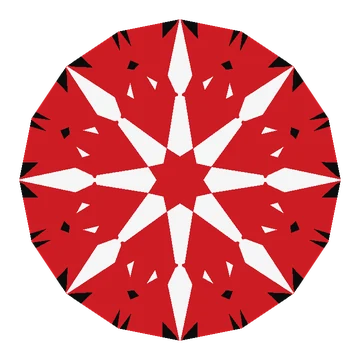
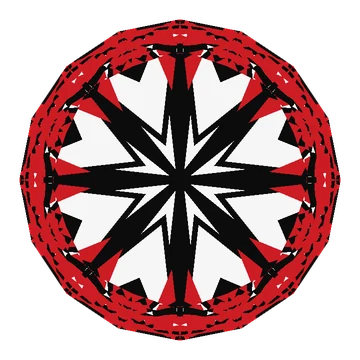
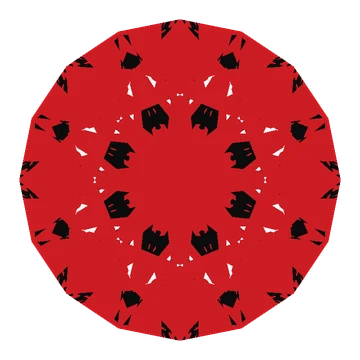
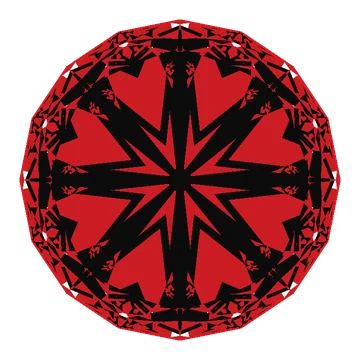
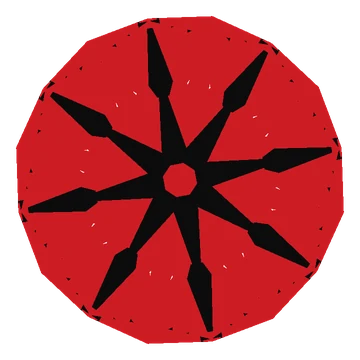
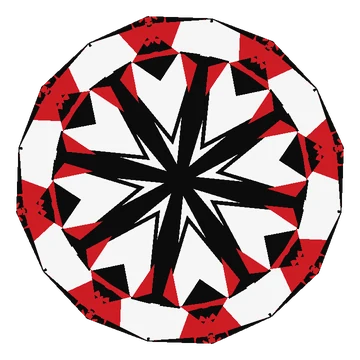
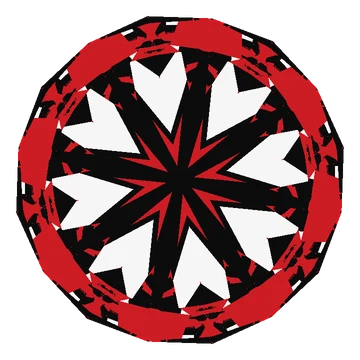
In moissanite it forms crisp arrows face-up and eight clean hearts face-down, which a diamond-proportioned round does not. It is matched to its material rather than better in general: in diamond its arrows turn dark and its hearts flood. The comparison is on the gemstones page.
Why BL-Anteros: a round cut for moissanite
Most moissanite is cut to diamond proportions. But moissanite bends light more strongly than diamond,
with a refractive index of about 2.65 against diamond's 2.42, so angles worked out for diamond send its light
back at the wrong angles. The patterns that make a well-cut round special, eight crisp arrows face-up and
eight hearts face-down, break up.
BL-Anteros keeps the T73's 73 facets and 53% table and re-solves the crown and pavilion for moissanite.
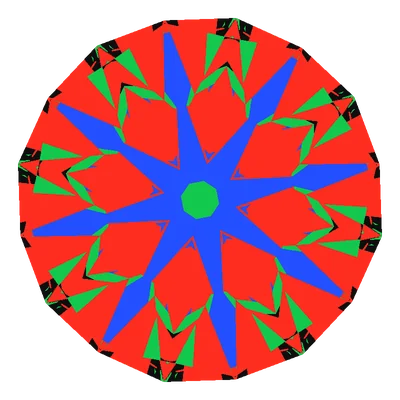
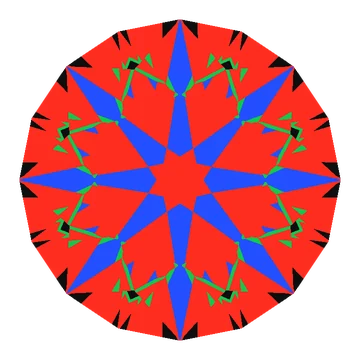
Here is the difference, in both stones, through a light-return scope and a Hearts & Arrows viewer.
BL-Anteros in diamond. The arrows go dark and the hearts flood with white: wrong stone for this cut.
Arrows, face-upHearts, face-down
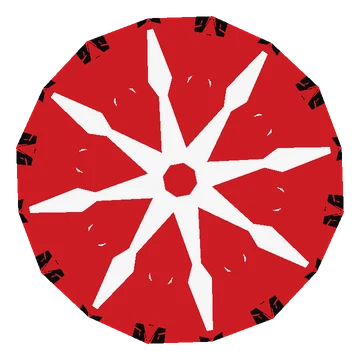
BL-Anteros in moissanite. Crisp arrows and eight clean hearts: the cut it was drawn for.
Direct Indirect Contrast
Leak. Face-up, the way a light-return scope shows a stone.
White: light from the viewer's white disk, which draws the
arrows and hearts. Red: light from the red reflector.
Black: the lens port, or light that never comes back.
All eight panels per instrument are computed from the cut files themselves, with the same
rules for every stone. The Hearts & Arrows viewer has a 2.5° lens hole, a white disk to 13.5° and a red
reflector to 90°.
What this means for you
Cutting or selling moissanite: BL-Anteros is the only cut in our catalogue that shows
both arrows and hearts in moissanite. A diamond-proportioned round, like the T73, loses both.
Cutting diamond: choose the T73 instead. BL-Anteros is matched to moissanite, not better
in general; in diamond its arrows go dark and its hearts flood.
Nothing new to learn at the machine: the same 73-facet plan on a 96 index gear as the
T73. Only the angles change.
Everything you need: the GemCad design, the tier table and a printable diagram, plus
the 3D model in six formats for settings and renders.
Face-up: the crown facets, drawn from the model's own edges.Profile: 59.4% total depth.
Light Return map of the BL-Anteros Cut in moissanite. A computed render of the model's geometry, not a photograph.
The BL-Anteros Cut in seven gemstones
The same geometry behaves differently in every material. Light that meets a pavilion facet at less than the
stone's critical angle passes straight out of the back instead of reflecting, which shows face-up as a window.
For each stone we measured how much of this model's pavilion, as seen face-down, is steeper than that angle, and
what the model weighs at its reference size. The pavilion mains of this design sit at 40.1°. As a rule of thumb a round design needs about 43.5° in amethyst for head-on light to reflect twice before it leaves the crown, so the mains are worth steepening for ruby, sapphire, emerald, amethyst.
Head-on light, first reflection. A full light-return census is part of the Brilliani Labs engine and will come to this page.
BL-Anteros Cut: questions
What files come with the BL-Anteros Cut 3D model?
Six formats: STEP (the exact faceted solid for CAD), 3DM for Rhino, STL and OBJ meshes, FBX for Blender, 3ds Max, Maya, Cinema 4D, Unity and Unreal, and GLB for the web and AR. All are in millimetres at real-world scale, with 73 planar facets.
Is there a faceting diagram for the BL-Anteros Cut?
Yes. The cutting files contain a GemCad .asc design (57 + 16 girdles = 73 facets, 96 index, 8-fold mirror-image symmetry), a tier table with angles, indices and cutting order in CSV, and a printable faceting diagram.
Does the BL-Anteros Cut work in sapphire, emerald or amethyst?
We measured the pavilion of this model against the critical angle of each stone. In Diamond, Moissanite, Cubic Zirconia, Ruby, Sapphire, Emerald, the whole pavilion reflects head-on light; in Amethyst, part of the pavilion lets light out of the back, so a steeper pavilion is advised. The pavilion mains of this design sit at 40.1°. As a rule of thumb a round design needs about 43.5° in amethyst for head-on light to reflect twice before it leaves the crown, so the mains are worth steepening for ruby, sapphire, emerald, amethyst.
How accurate is the BL-Anteros Cut cutting file?
We check it facet by facet against the 3D model it was written from. Every crown and pavilion facet within under 0.001° of the 3D model (average under 0.001°). The angles are the ones you set on the machine; the 3D model is the same stone you render or set.
How big is the BL-Anteros Cut model, and what does it weigh?
The model measures 8.15 x 8.15 x 4.84 mm, which is 1.91 ct in diamond. The same size weighs 1.75 ct in moissanite, 3.15 ct in cubic zirconia, 2.17 ct in ruby, 2.17 ct in sapphire, 1.48 ct in emerald, 1.44 ct in amethyst. Scale it uniformly to any size: weight follows the cube of the size.
Can I 3D print or cast the BL-Anteros Cut model?
Yes. The mesh is watertight and manifold, with outward normals and no duplicate vertices, so it prints and casts without repair. Use the STEP file when you need the exact faceted solid in CAD.
 Arrows, face-up
 Hearts, face-down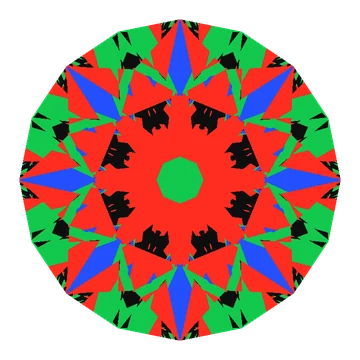
 Arrows, face-up
 Hearts, face-down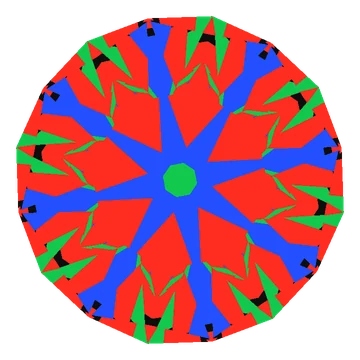
 Arrows, face-up
 Hearts, face-down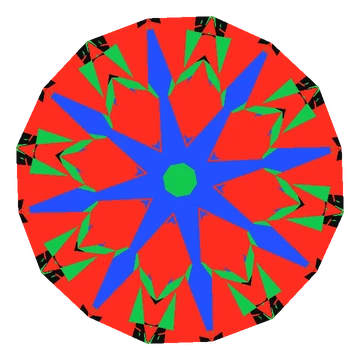
 Arrows, face-up
 Hearts, face-down